TOPIC 1. Language as communication: oral and written language. Factors that define a communicative situation: sender, receiver, functionality and context.
- 1. Introduction
- 2. Language as communication
- 2.1. The concept of language and communication
- 2.2. Language as a system of communication
- 3. Oral and written language
- 3.1. Oral language
- 3.2. Written language
- 3.3. Similarities and differences
- 4. The communicative situation
- 4.1. Sender
- 4.2. Receiver
- 4.3. Functionality and communicative purpose
- 4.4. Context
- 5. Language and communicative competence in Primary Education
- 6. Didactic implications for the English classroom
- 7. Conclusion
- 8. Bibliographical references and legislation
1. Introduction
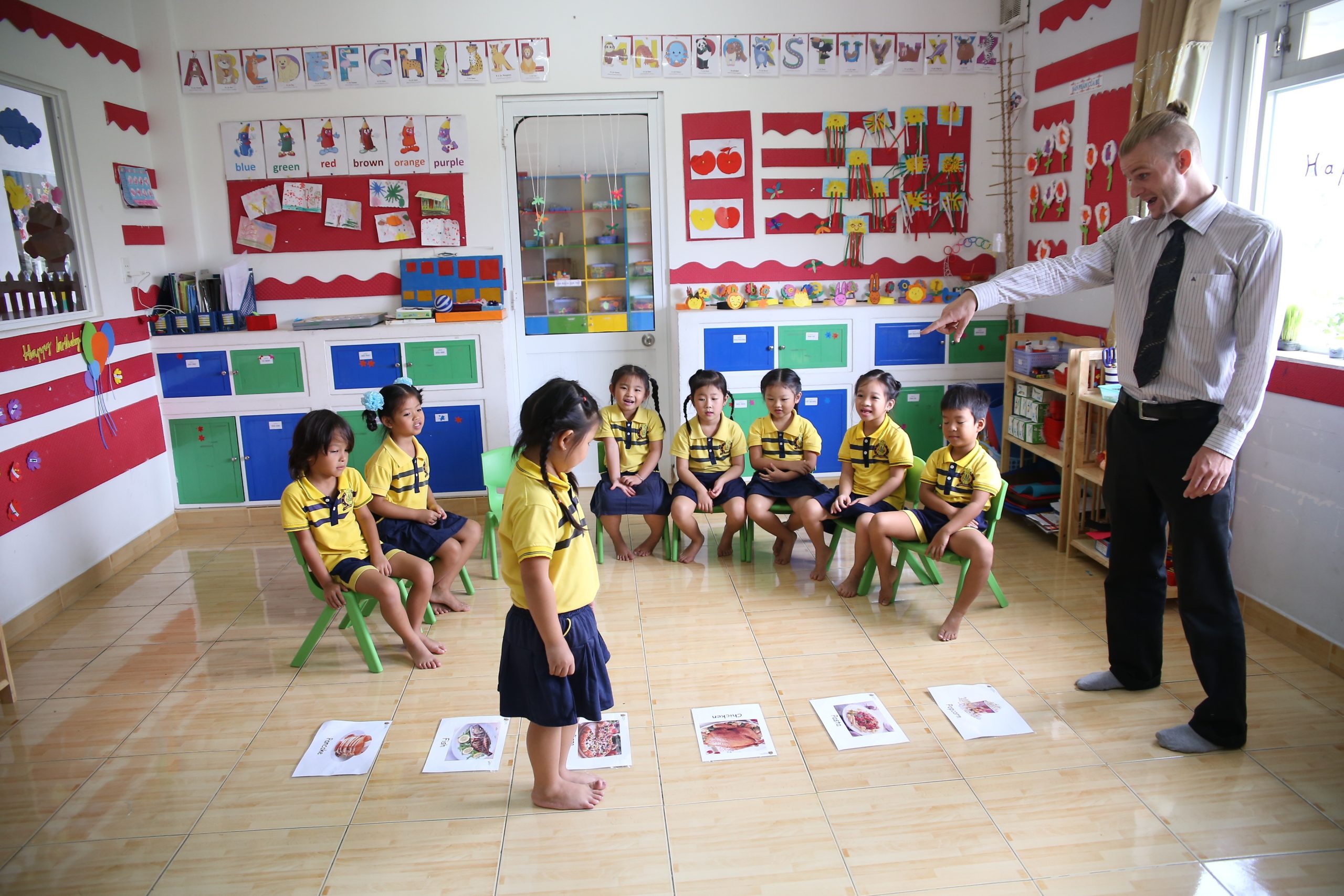
“The limits of my language mean the limits of my world.” With these words, Wittgenstein (1922) highlighted the close relationship between language, thought and our understanding of reality. From an educational perspective, language is not merely a system of grammatical rules but one of the main tools human beings use to communicate, learn, express emotions, build relationships and participate in society.
Communication therefore plays a central role in education. In the case of a foreign language, its importance is even greater, since learning English should enable pupils to interact with other people and understand different cultures and perspectives. Consequently, the main purpose of language teaching cannot be restricted to the acquisition of vocabulary or grammatical structures, but must involve the development of the ability to use language appropriately in meaningful situations.
This approach is consistent with the current educational framework. The Real Decreto 157/2022, which establishes the basic curriculum of Primary Education, states that pupils should acquire basic communicative competence in at least one foreign language in order to understand and express simple messages and communicate in everyday situations. Likewise, the curriculum places particular emphasis on communication, interaction and the development of linguistic and plurilingual competence.
In the following sections, I will analyse language as a means of communication, paying special attention to oral and written language and to the main factors involved in a communicative situation: the sender, the receiver, functionality and context. Finally, these theoretical principles will be related to the teaching and learning of English in Primary Education.
2. Language as communication
2.1. The concept of language and communication
Communication can be understood as the process through which people exchange information, ideas, feelings or intentions by means of different signs and codes. Although human beings can communicate through gestures, images, sounds or other systems, language is the most complex and productive system of communication available to us.
Language is a socially shared system of signs and rules which allows individuals to construct and interpret meaning. From a structural perspective, Saussure (1916) distinguished between langue, the socially shared system, and parole, its individual use. This distinction helps us understand that language has both a social dimension and an individual dimension.
However, language cannot be considered only as a formal structure. Halliday (1978) approached language from a functional and social perspective, emphasising that people use language to achieve purposes and to interact with others. Therefore, language acquires its full meaning when it is used in a particular social situation.
This idea has important implications for language education. If pupils learn English only as a collection of isolated rules, their ability to communicate may remain limited. They need opportunities to use language for genuine purposes, such as asking for information, expressing opinions, describing experiences or collaborating with classmates.
2.2. Language as a system of communication
Language is characterised by several features which distinguish it from other forms of communication. It is symbolic, since words represent objects, ideas and experiences; conventional, because members of a linguistic community share meanings; and productive, because speakers can create an unlimited number of messages from a finite number of linguistic elements.
Furthermore, language is essentially social. It develops through interaction with other people and is influenced by cultural and contextual factors. For this reason, knowing a language involves not only knowledge of its linguistic system but also knowledge of how that system is used in different situations.
Jakobson (1960) identified several functions of language, including the referential, expressive, conative, phatic, metalingual and poetic functions. In the Primary classroom, these functions can be developed through meaningful communicative activities: pupils can give information, express feelings, ask questions, maintain interaction, reflect on language or create imaginative texts.
Thus, language should be viewed as both a system and an instrument for action and interaction.
3. Oral and written language
Language can be manifested mainly through oral and written communication. Although these two modalities share the same linguistic system, they present important differences that should be taken into account when teaching English.
3.1. Oral language
Oral language is primarily auditory and is normally characterised by immediacy and interaction. Speakers and listeners usually share the same communicative situation and can react to each other immediately.
Oral communication is often spontaneous and less planned than written communication. Speakers can reformulate their messages, use repetitions or rely on gestures and facial expressions to facilitate understanding. Moreover, intonation, stress, rhythm, pauses and pronunciation contribute significantly to meaning.
Another important characteristic is the possibility of immediate feedback. When a pupil does not understand a message, for example, they can ask for clarification or repetition. This makes interaction an essential component of oral communication.
In the English classroom, oral language should therefore not be reduced to the repetition of isolated sentences. Pupils should gradually be encouraged to use English to interact, negotiate meaning and express themselves according to their level.
3.2. Written language
Written language is a visual and permanent form of communication. Unlike oral communication, it usually allows greater planning, revision and organisation.
Written messages rely on resources such as orthography, punctuation, paragraph organisation, cohesion and coherence. Since the writer and reader are frequently separated in time and space, the message often needs to be more explicit and carefully structured.
For learners of English, written communication also presents specific challenges. The relationship between spelling and pronunciation is not always transparent, which may create difficulties when pupils move from oral to written language. Therefore, the development of writing should be gradual and supported by models, meaningful contexts and opportunities for revision.
3.3. Similarities and differences
Oral and written language are not two completely separate systems. They are interconnected forms of communication which share vocabulary, grammar and meaning-making processes.
However, oral language tends to be more immediate, interactive and dependent on prosody and non-verbal elements, whereas written language is generally more permanent, planned and dependent on graphic conventions.
From an educational perspective, both modalities should be developed in an integrated way. A classroom project, for instance, may require pupils to listen to information, discuss it with their classmates, read different sources and finally produce a written text. In this way, oral and written language reinforce each other.


4. The communicative situation
Communication does not take place in isolation. It occurs within a communicative situation, in which different elements interact to determine how a message is produced and interpreted.
4.1. Sender
The sender is the person who produces and transmits the message. The sender has a communicative intention and selects linguistic and non-linguistic resources according to the situation.
For example, a pupil asking a classmate “Could you help me, please?” selects a particular expression because of the purpose of the communication and the relationship with the receiver.
In language teaching, pupils should therefore learn to adapt their messages to different communicative purposes rather than simply reproduce memorised structures.
4.2. Receiver
The receiver is the person who receives and interprets the message. Communication is not complete when a message is produced: the receiver must construct meaning from it.
Consequently, the receiver should not be considered a passive participant. Understanding involves linguistic knowledge, previous experience, contextual information and the interpretation of verbal and non-verbal clues.
In the English classroom, developing listening skills is therefore essential. Pupils need to learn not only to hear sounds but to identify the general meaning, select relevant information, make simple inferences and use contextual clues.
4.3. Functionality and communicative purpose
Every communicative act has a purpose. People communicate in order to inform, request, persuade, apologise, describe, express emotions, establish relationships or obtain information, among many other possibilities.
This functional dimension is particularly relevant in foreign-language teaching. A grammatical structure should be introduced and practised in relation to what pupils want or need to communicate.
For instance, pupils may learn questions such as “Where is the library?” not simply to practise a grammatical structure, but because they need to obtain information in a meaningful situation.
This principle is closely related to the Communicative Approach, which considers language primarily as a tool for communication rather than as an object of study in isolation.
4.4. Context
Finally, context determines to a great extent how a message is interpreted. It includes the physical situation, the participants, their relationship, their shared knowledge, the cultural environment and the purpose of communication.
The same sentence may therefore have different meanings depending on the context. For example, “It is cold here” may simply describe a situation, but in a particular context it may function as an indirect request to close a window.
This shows that understanding a language requires more than grammatical knowledge. Learners need to develop the ability to interpret messages according to the situation in which they occur.
5. Language and communicative competence in Primary Education
The previous considerations lead us to the concept of communicative competence. Hymes (1972) argued that knowing a language involves not only knowing whether a sentence is grammatically correct, but also knowing whether it is appropriate in a particular social situation.
This perspective was further developed by Canale and Swain (1980), who described communicative competence as involving different dimensions, including grammatical, sociolinguistic and strategic competence.
Therefore, a pupil who knows English grammar but cannot ask for help, take part in a conversation or adapt their language to the situation has not yet developed full communicative competence.
This approach is particularly relevant in Primary Education. The current curriculum connects foreign-language learning with linguistic and plurilingual competence and places communication at the centre of the area. It emphasises comprehension, production, interaction and mediation, as well as the recognition and appreciation of linguistic and cultural diversity.
The curriculum of the ___________ (añade la comunidad autonóma a la que te presentas) established through __________ (decreto del currículo de tu comunidad autónoma), follows this communicative and competence-based perspective and includes the foreign language within the development of pupils’ plurilingual competence.
Consequently, English should be taught as a means of communication and social interaction, enabling pupils to use the language progressively and appropriately in meaningful contexts.
6. Didactic implications for the English classroom
The theoretical principles discussed above have several practical consequences for the teaching of English in Primary Education.
First, the classroom should provide meaningful communicative situations in which pupils have a genuine reason to use English. Communication should therefore be integrated into tasks rather than restricted to mechanical repetition.
Secondly, interaction should play a central role. Pair work, cooperative activities, information-gap tasks, role plays, interviews, games and short projects can create opportunities for pupils to communicate with different partners and for different purposes.
Thirdly, the four language skills should be developed in an integrated way. Listening, speaking, reading and writing should not be treated as completely isolated abilities. A classroom task may naturally involve several of them: pupils may listen to information, discuss it, read a short text and produce a written response.
Non-verbal communication should also be considered. Gestures, facial expressions, images, intonation and body language can support comprehension, particularly in the early stages of foreign-language learning. They are especially useful when pupils have limited linguistic resources.
Another important principle is the use of meaningful and contextualised language. Rather than presenting vocabulary and grammar as isolated elements, the teacher can introduce them through stories, songs, dialogues, classroom routines, games, projects and situations related to pupils’ interests and experiences.
Furthermore, the classroom should promote an atmosphere in which error is understood as a natural part of learning. Excessive correction may inhibit pupils’ willingness to communicate. The teacher should therefore provide appropriate feedback while encouraging participation, risk-taking and progressive autonomy.
Attention to diversity is equally important. Communicative activities should offer different forms of access and participation, using visual, auditory and kinaesthetic support when necessary and adapting tasks to pupils’ individual needs. Cooperative structures can also facilitate participation and peer support.
Finally, communication today is increasingly multimodal and digital. Pupils encounter messages through texts, images, audio, video and digital environments. Therefore, English teaching should help them interpret and produce different types of messages while developing responsible and critical use of digital resources.
In this way, the English classroom becomes a genuine communicative environment, in which pupils do not merely learn about the language but learn to use it.
7. Conclusion
To conclude, language is much more than a collection of grammatical rules. It is a social and functional system that allows people to communicate, interact, express themselves and construct meaning.
Understanding the differences and relationships between oral and written language, as well as the role of the sender, receiver, communicative purpose and context, is essential for understanding how communication takes place.
From an educational perspective, these principles lead us towards a communicative and competence-based approach to English teaching. The ultimate aim is not for pupils simply to know English, but to use English to communicate with others in meaningful and increasingly varied situations.
As teachers, our responsibility is therefore to create opportunities in which every learner can participate, interact and progressively become an autonomous and confident user of the foreign language.
8. Bibliographical references and legislation
Bibliographical references
- Canale, M. & Swain, M. (1980). Theoretical Bases of Communicative Approaches to Second Language Teaching and Testing.
- Crystal, D. (2003). The Cambridge Encyclopedia of Language. Cambridge University Press.
- Halliday, M. A. K. (1978). Language as Social Semiotic. Edward Arnold.
- Hymes, D. (1972). On Communicative Competence. In J. B. Pride & J. Holmes (Eds.), Sociolinguistics. Penguin.
- Jakobson, R. (1960). Linguistics and Poetics. In T. A. Sebeok (Ed.), Style in Language. MIT Press.
- Saussure, F. de (1916). Course in General Linguistics. McGraw-Hill.
- Wittgenstein, L. (1922). Tractatus Logico-Philosophicus.
Legislation
- European Commission (2019). Key Competences for Lifelong Learning.
- Council of Europe (2020). Common European Framework of Reference for Languages: Learning, Teaching, Assessment – Companion Volume.
- Ley Orgánica 2/2006, de 3 de mayo, de Educación, as amended by Ley Orgánica 3/2020, de 29 de diciembre.
- Real Decreto 157/2022, de 1 de marzo, por el que se establecen la ordenación y las enseñanzas mínimas de la Educación Primaria.
- Decreto del currículo de la comunidad autónoma a la que te presentas