Topic 2. Communication in the foreign language classroom: verbal and non-verbal communication. Extralinguistic strategies: non-verbal reactions to messages in different contexts
- Introduction
- Communication in the foreign language classroom
2.1. The concept of communication
2.2. Communication as interaction - Verbal communication in the English classroom
3.1. Teacher talk
3.2. Learner talk and classroom interaction
3.3. Communicative functions in the classroom - Non-verbal communication
4.1. Main elements of non-verbal communication
4.2. The relationship between verbal and non-verbal communication
4.3. Non-verbal reactions to messages - Extralinguistic strategies in the foreign language classroom
5.1. Strategies for understanding messages
5.2. Strategies for producing and compensating messages
5.3. Strategies for interaction - Didactic application in Primary Education
6.1. Creating meaningful communicative situations
6.2. Activities and classroom techniques
6.3. Attention to diversity - Conclusion
- Bibliographical references and legislation
1. Introduction
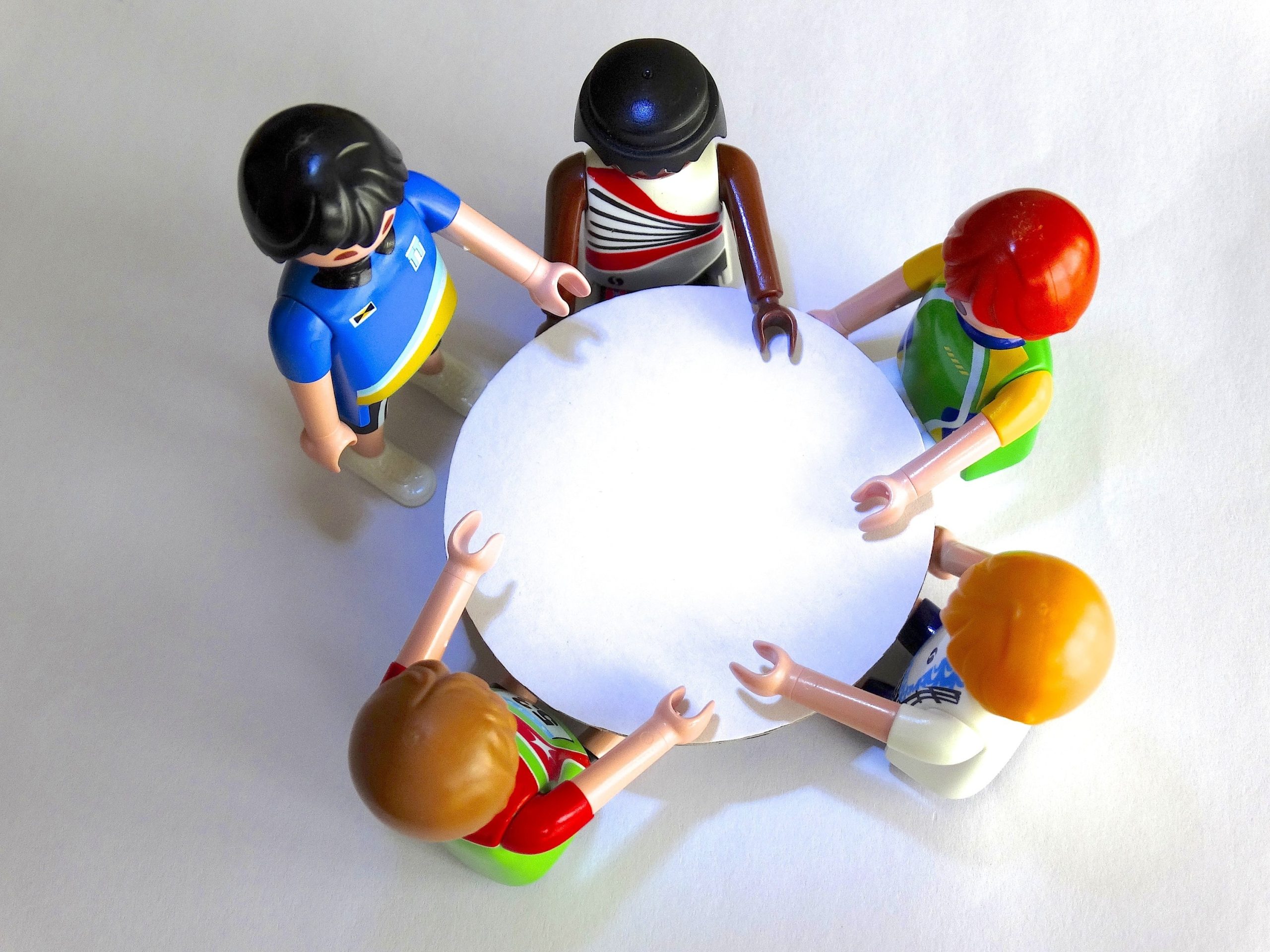
“Through others we become ourselves.” As Vygotsky (1978) stated, learning is fundamentally a social process. This idea is particularly relevant in the foreign language classroom, where communication and interaction with teachers and peers become essential tools for learning English.
Communication is at the heart of language learning. We do not learn a foreign language simply to know vocabulary or grammatical rules, but to understand others and to express ideas, feelings, needs and intentions in meaningful situations.
As Hymes (1972) pointed out through the concept of communicative competence, knowing a language involves more than knowing its grammatical system: speakers also need to know how to use language appropriately according to the situation, the interlocutors and the communicative purpose.
This idea is particularly relevant in the Primary English classroom. Learners are still developing their linguistic resources and, therefore, communication cannot depend exclusively on words. Gestures, facial expressions, pictures, body movement, intonation, demonstrations and other contextual clues can facilitate understanding and allow pupils to participate even when their command of English is still limited.
The current curriculum reinforces this communicative perspective. Royal Decree 157/2022 establishes the acquisition of basic communicative competence in at least one foreign language as an objective of Primary Education. It also states that, in the foreign language learning process, comprehension, expression and oral interaction should be prioritised. The curriculum therefore considers verbal and non-verbal resources as essential elements of communication.
Consequently, this topic will examine verbal and non-verbal communication in the foreign language classroom, the main extralinguistic strategies available to learners and their practical application in Primary Education.
2. Communication in the foreign language classroom
2.1. The concept of communication
Communication can be understood as a process through which people exchange meanings, information, emotions and intentions by means of different signs and channels.
The traditional communication model usually includes a sender, a receiver, a message, a code, a channel and a context. However, communication in a real classroom is more complex because participants constantly change roles. A pupil who answers a question becomes a sender, while classmates and the teacher become receivers. Communication is therefore dynamic and interactive.
Jakobson (1960) identified several functions of language, including the referential, expressive, conative, phatic, metalingual and poetic functions. In the English classroom, these functions can appear naturally. For example, when the teacher says “Open your books”, language has a conative function; when a pupil says “I’m nervous”, it has an expressive function; and when the teacher asks “Can you hear me?”, the main purpose is phatic.
From a didactic perspective, this means that pupils should not only practise isolated structures but also use English for real purposes.
For instance, instead of simply practising the structure “Can I…?”, pupils may actually use it to ask for a pencil, request permission to leave their seat or ask a partner for help. The communicative value of the language becomes more evident because there is a genuine reason to use it.
2.2. Communication as interaction
Modern language teaching understands communication as a process of interaction rather than a simple transmission of information.
Interaction requires participants to listen, interpret, respond, negotiate meaning and adapt their messages. It also involves social conventions such as taking turns, showing interest, asking for clarification and using appropriate forms of politeness.
This is especially important in a foreign language because pupils may not always have the linguistic resources required to express exactly what they want to say. They therefore need strategies that help them maintain communication despite their limitations.
In this sense, communication itself becomes both the objective and the means of learning English.
3. Verbal communication in the English classroom
Verbal communication includes the linguistic resources used to construct and interpret messages. In the foreign language classroom, it involves the teacher’s language as well as the language produced by pupils.
3.1. Teacher talk
Teacher talk has an important influence on language learning because it constitutes one of the main sources of English input available to pupils.
The teacher uses language to give instructions, ask questions, explain concepts, organise activities, provide feedback, encourage participation and manage classroom routines.
However, teacher talk should be adapted to the learners’ level. Instructions should be clear, concise and supported by context whenever necessary. For example, rather than translating “Take your notebook, open it and write the date” into Spanish, the teacher can accompany the instruction with gestures and demonstrations.
Repetition, reformulation and checking comprehension are also useful techniques:
- “Work with your partner.”
- “Work with the person next to you.”
- “Are you working alone or with a partner?”
These strategies provide comprehensible input while keeping English as the main language of classroom communication.
The teacher should also avoid excessive teacher talking time. If communication is always controlled by the teacher, pupils have fewer opportunities to produce language. A communicative classroom should therefore progressively transfer responsibility to learners.


3.2. Learner talk and classroom interaction
Pupils need frequent opportunities to use English actively. Pair work, small-group activities, information-gap tasks, role plays and cooperative learning can increase the amount of meaningful interaction.
Interaction can take different forms:
- Teacher–pupil interaction.
- Pupil–pupil interaction.
- Small-group interaction.
- Whole-class interaction.
Pair and group work are particularly valuable because they allow pupils to communicate with several partners and reduce the pressure associated with speaking in front of the whole class.
For example, in an information-gap activity, pupil A has information that pupil B does not have. They must ask and answer questions in English to complete a task. Communication therefore has a genuine purpose.
3.3. Communicative functions in the classroom
Classroom communication should include functions that pupils can transfer to everyday situations.
Among them, we can mention:
- Greeting and saying goodbye.
- Introducing oneself and others.
- Asking for information.
- Expressing likes and dislikes.
- Asking for help.
- Giving instructions.
- Agreeing and disagreeing.
- Expressing feelings.
- Apologising and thanking.
- Asking for clarification.
- Expressing uncertainty.
Classroom routines are particularly useful because repeated expressions gradually become meaningful and automatic. Expressions such as “Can you repeat, please?”, “I don’t understand”, “What does this mean?” or “Can I borrow your pencil?” give pupils practical tools to communicate.
4. Non-verbal communication
Communication does not take place exclusively through words. Non-verbal communication refers to the transmission and interpretation of meaning through elements such as facial expressions, gestures, posture, eye contact, body movement, physical distance and other visual or paralinguistic resources.
In a foreign language classroom, non-verbal communication has a double function: it is part of the message and, at the same time, it can facilitate language learning.
4.1. Main elements of non-verbal communication
Several elements are particularly relevant in the Primary classroom:
- Facial expressions can communicate emotions and intentions. A smile can express approval or friendliness, while a confused expression can indicate lack of understanding.
- Gestures can represent actions or concepts. A teacher can mime “open”, “close”, “stand up”, “sit down” or “run”, allowing pupils to associate language with meaning without necessarily translating it.
- Body posture and movement can communicate attitudes such as attention, enthusiasm, uncertainty or rejection.
- Eye contact contributes to interaction. Looking at the speaker generally indicates attention, although teachers should be aware that cultural conventions regarding eye contact may vary.
- Prosodic elements such as intonation, rhythm, volume and stress also influence meaning. The difference between a statement and a question, for example, can be partly conveyed through intonation.
Visual resources should also be considered within a broader multimodal approach. Pictures, diagrams, gestures, objects and demonstrations can support comprehension and help learners construct meaning.
4.2. The relationship between verbal and non-verbal communication
Verbal and non-verbal communication normally work together.
A teacher saying “Excellent!” while smiling and giving a thumbs-up reinforces the positive meaning of the message. Conversely, saying “Well done” with a negative facial expression could create confusion because the verbal and non-verbal messages contradict each other.
In language teaching, this relationship is especially useful because pupils can use non-verbal information to interpret unfamiliar language.
For example, if the teacher says “The elephant is enormous” while opening their arms widely, the gesture provides an additional clue to the meaning of “enormous”.
Therefore, non-verbal communication should not be seen simply as an accessory to language. It can become an effective scaffold for comprehension and production.
4.3. Non-verbal reactions to messages
The topic also refers specifically to non-verbal reactions to messages in different contexts.
A pupil may demonstrate understanding without producing a verbal answer. For example, they can:
- Nod or shake their head.
- Point to an object or picture.
- Choose an option.
- Raise their hand.
- Follow an instruction.
- Mime an action.
- Use a facial expression.
- Move towards or away from an object.
- Reproduce a gesture.
These reactions are particularly useful in the early stages of learning, when pupils may understand more English than they are able to produce.
For instance, after saying “Touch something blue”, the teacher can assess comprehension by observing whether pupils follow the instruction correctly. The response itself becomes evidence of understanding.
5. Extralinguistic strategies in the foreign language classroom
Extralinguistic strategies are resources that help learners understand or communicate without relying exclusively on linguistic knowledge. They are especially important in Primary Education because communication should not stop whenever pupils encounter an unknown word or structure.
5.1. Strategies for understanding messages
When pupils receive a message in English, they can use several contextual clues:
- Gestures and facial expressions.
- Pictures and illustrations.
- Objects and realia.
- Demonstrations.
- Intonation and rhythm.
- The situation in which communication takes place.
- Previously known information.
- Key words.
- Similarities with other languages.
For example, if the teacher says “Put the book under the chair” while physically demonstrating the action, pupils can infer the meaning of “under” through the relationship between the words and the movement.
These strategies encourage pupils to become active listeners instead of waiting for a word-by-word translation.
5.2. Strategies for producing and compensating messages
Extralinguistic strategies are also useful when pupils want to express something but lack the necessary vocabulary.
They can:
- Use gestures.
- Point to an object.
- Draw something.
- Mime an action.
- Use a synonym or a simpler expression.
- Describe an unknown word.
- Ask for help.
- Use their first language strategically when necessary.
- Combine words with visual or digital resources.
For example, a pupil who does not remember the word “scissors” may mime cutting. Another pupil may recognise the gesture and provide the word.
This type of strategy should not be considered a failure. On the contrary, it demonstrates that the learner is attempting to maintain communication and is developing communicative competence.
5.3. Strategies for interaction
Interaction also requires strategies that help pupils manage communication.
Useful expressions include:
- “Can you repeat, please?”
- “Can you speak more slowly?”
- “I don’t understand.”
- “What does … mean?”
- “How do you say … in English?”
- “Do you mean…?”
- “Can you help me?”
These expressions can become part of classroom routines and gradually allow pupils to take greater responsibility for their own communication.
In addition, pupils need to learn how to take turns, listen actively, respect different opinions and respond appropriately to their interlocutors.
The current curriculum gives particular importance to interaction, cooperation, empathy and communicative strategies. In the third cycle, for example, pupils are expected to participate in short interactive situations using resources such as repetition, a slower rhythm and non-verbal language, while showing empathy and respect for linguistic politeness.
6. Didactic application in Primary Education
The theoretical principles described above should have a direct impact on classroom practice. The objective is not to teach pupils a list of non-verbal gestures, but to create situations in which these resources naturally facilitate communication.
6.1. Creating meaningful communicative situations
A communicative classroom should provide pupils with reasons to listen and speak.
Activities should therefore have a clear purpose. Instead of asking pupils to repeat isolated sentences mechanically, the teacher can create situations such as:
- “You are in a shop. Ask for three things.”
- “You are lost. Ask your partner for directions.”
- “You are organising a birthday party. Decide what food you need.”
- “You are a tourist in London. Ask for information.”
These situations combine verbal language with gestures, facial expressions, visual support and contextual information. The teacher should also provide sufficient scaffolding at the beginning and gradually remove it as pupils become more autonomous.
6.2. Activities and classroom techniques
A wide variety of activities can develop verbal and non-verbal communication:
- Total Physical Response, associated with Asher (1969), is particularly useful with younger learners because pupils demonstrate comprehension through physical actions. The teacher can give commands such as “Stand up”, “Open your book” or “Touch something green”, and pupils respond physically.
- Mime and guessing games are also useful. One pupil represents an action, occupation, animal or emotion and the others identify it in English.
- Role plays provide more complex communicative situations. For example, pupils can simulate a restaurant, a doctor’s appointment, a tourist information office or a shop.
- Information-gap activities are particularly valuable because the lack of information creates a genuine need to communicate.
- Drama and storytelling can also integrate verbal and non-verbal resources. When telling a story, the teacher can change voice, facial expression and movement. Pupils can subsequently reproduce or transform the story.
- Visual routines are another useful resource. Classroom posters containing expressions such as “Can I help you?”, “I don’t understand” or “Can you repeat?” can support pupils during interaction.
Finally, digital resources can offer multimodal communication through images, audio, video, text and interactive activities. Nevertheless, technology should serve a communicative purpose rather than become an objective in itself.
6.3. Attention to diversity
The use of verbal and non-verbal resources is also closely connected with inclusive education. Some pupils may need additional visual support, more repetition, slower speech, gestures, written models or alternative ways of responding. For example, allowing a pupil to point to an image or use a gesture before producing the corresponding English word can provide an accessible entry point into the task.
The same principle applies to pupils with difficulties in oral expression. A visual sequence, word bank, gesture or sentence frame can reduce the linguistic demand while maintaining the communicative objective. This approach is consistent with Universal Design for Learning, which promotes multiple means of engagement, representation and action and expression.
It is also important to create a safe environment in which mistakes are considered a natural part of learning. If pupils are afraid of making mistakes, they are less likely to participate. Therefore, the teacher should value communication attempts, provide constructive feedback and encourage cooperation between classmates.
The curriculum itself emphasises confidence, the value of error as an instrument for improvement and the use of strategies to facilitate communication.
7. Conclusion
Communication in the foreign language classroom is much more than the transmission of words. It is a complex process in which verbal language, gestures, facial expressions, intonation, visual information, context and interaction work together to construct meaning.
For this reason, the English teacher should not expect pupils to communicate perfectly before allowing them to participate. On the contrary, the classroom should provide them with strategies that enable them to understand and express themselves even when their linguistic resources are still developing.
Extralinguistic strategies are particularly valuable in Primary Education because they make communication more accessible, meaningful and inclusive. A gesture, a picture, a demonstration or a change in intonation can sometimes communicate what a learner cannot yet express through words.
Consequently, the role of the teacher is not simply to transmit linguistic knowledge, but to create communicative situations in which pupils listen, interact, negotiate meaning and progressively become more autonomous users of English.
In the end, the objective is not for pupils to speak English perfectly from the beginning, but to gradually discover that English is a real tool for communicating with others.
8. Bibliographical references and legislation
- Asher, J. J. (1969). The Total Physical Response Approach to Second Language Learning.
- Canale, M. & Swain, M. (1980). Theoretical Bases of Communicative Approaches to Second Language Teaching and Testing. Applied Linguistics, 1(1), 1–47.
- Crystal, D. (2003). English as a Global Language. Cambridge University Press.
- Halliday, M. A. K. (1978). Language as Social Semiotic. Edward Arnold.
- Hymes, D. (1972). On Communicative Competence. In J. B. Pride & J. Holmes (eds.), Sociolinguistics. Penguin.
- Jakobson, R. (1960). Linguistics and Poetics. In T. Sebeok (ed.), Style in Language. MIT Press.
- Lantolf, J. P. (2000). Sociocultural Theory and Second Language Learning. Oxford University Press.
- Vygotsky, L. S. (1978). Mind in Society. Harvard University Press.
Legislation:
- Ley Orgánica 2/2006, de 3 de mayo, de Educación, as amended by Ley Orgánica 3/2020, de 29 de diciembre.
- Real Decreto 157/2022, de 1 de marzo, por el que se establecen la ordenación y las enseñanzas mínimas de la Educación Primaria.
- Decreto autonómico